Picture a Franciscan monk walking the dry hillsides of Sicily in the late 1600s. He notices a small climbing vetch with maroon and violet flowers and a scent so strong it seems out of proportion to the plant. That monk, Francisco Cupani, did more than admire it. In 1695 he sent seeds north, and the plant went on to become one of the most beloved flowers in Britain and North America.
A wildflower with a powerful perfume
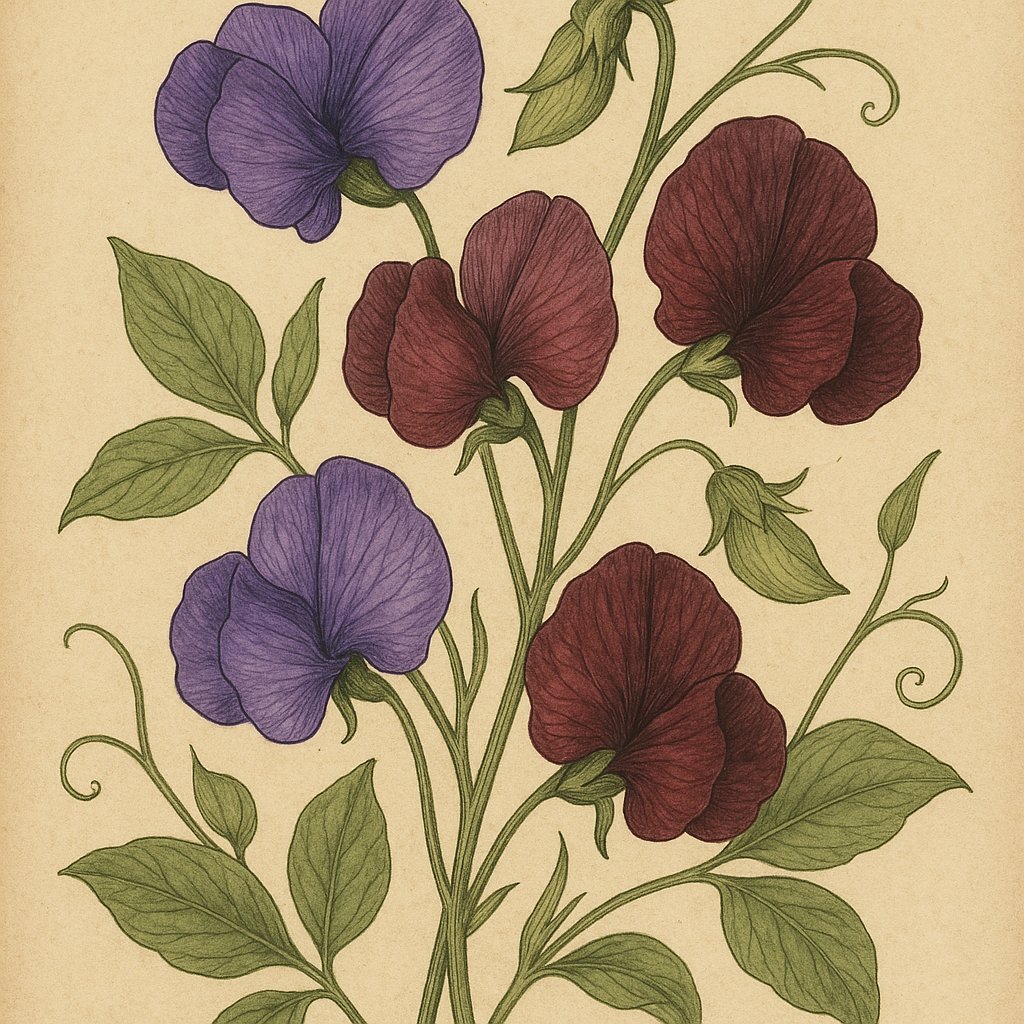
The sweet pea, Lathyrus odoratus, is native to Sicily, southern Italy and some Aegean islands. The wild form is modest. Its flowers are small, usually bicolored in deep purple and maroon, and carried in pairs or threes. What made it special was the fragrance, a mix of orange blossom and honey.
Cupani sent seeds to a schoolmaster in Enfield, England, Dr. Robert Uvedale, and to a Dutch botanist, Casper Commelin. Linnaeus gave the plant its formal name in 1753, and “odoratus” says it all. For the next century or so it stayed a curiosity, grown for scent. A few early color forms appeared, such as the pink-and-white ‘Painted Lady’, which is still grown today.
How a Scottish gardener changed everything
The real transformation began in the 1870s with Henry Eckford, a Scottish nurseryman who moved to Wem, in Shropshire. Over roughly two decades he crossed and selected sweet peas obsessively. He ended up introducing more than 100 named varieties, with larger blooms and a range of colors the plant had never shown before: clear pinks, lavenders, oranges and creamy whites.
By 1900, the plant’s bicentenary in England, sweet peas were fashionable enough to inspire a major show and the founding of the National Sweet Pea Society. Then came a lucky accident. In 1900 and 1901, a gardener at Althorp, the Spencer family estate, spotted a seedling with larger, wavy-edged petals. The ‘Countess Spencer’ type became the template for most of the sweet peas we see now: ruffled, showy and good for cutting. At nearly the same time, other growers in Britain and California found similar mutations. Eckford’s work had made the plant ready for them.
Why it found a home in cottage gardens
Sweet peas suited the English cottage garden almost too well. England’s cool, damp springs are ideal for them. They climb up a bamboo teepee in an afternoon and scramble over fences, and the more you cut, the more they bloom. Cottage gardeners valued plants that were useful as well as pretty, and a jam jar of sweet peas on a kitchen table fit the bill.
The plant crossed the Atlantic early and became a US favorite as well. California’s coastal climate turned out to be ideal for seed production, and the area around Lompoc became a major source of sweet pea seed. Meanwhile, American breeders developed compact types like ‘Cupid’, which suits containers and small spaces.
Growing sweet peas in the US: what actually matters
The plant’s history explains its needs. It evolved in a Mediterranean climate with cool, wet winters, and it hates summer heat. Once nights stay above the 70s °F, flowering slows and the vines fade. In my experience, timing is the main reason people fail with them. Here is what works:
- Sow early. In zones 8–10, plant in fall for spring bloom. In colder regions, sow as soon as the soil can be worked, or start seeds indoors in late winter.
- Give roots room. Use deep pots or paper tubes, because sweet peas resent root disturbance. Cool, rich, well-drained soil is best.
- Pinch young seedlings. When they have three or four pairs of leaves, cut the tip back to encourage branching.
- Support them well. Netting, trellis or a teepee at least 5–6 feet tall will do.
- Cut often. Once pods form, the plant thinks its work is done. Picking every couple of days keeps it flowering.
- Water deeply and mulch. This keeps the roots cool and delays heat stress.
If scent matters most to you, check the variety description. Breeders chasing big ruffled blooms sometimes lost fragrance along the way. Heirlooms such as ‘Cupani’, ‘Matucana’ and ‘Painted Lady’ still carry the old perfume.
One caution: unlike the edible garden pea, sweet pea seeds and pods are toxic if eaten in quantity. Keep them away from children and pets.
A flower worth knowing better
The sweet pea’s journey runs from a monk’s chance find on a Sicilian slope, through a Scottish breeder’s patience and a lucky mutation at an English estate, to backyard fences across America. Its history is a good reminder that many garden favorites began as small wild plants. If you want to go deeper, look into Eckford’s original varieties and heirloom seed collections. Growing a few of the old types next to a modern ruffled one is a good way to see more than 300 years of breeding in a single row.