A guide to growing cut flowers in your backyard
The first summer I grew zinnias for cutting, I planted them too close together, forgot to pinch them, and still ended up with enough blooms to fill every jar in my kitchen for weeks. That experience taught me something important: growing cut flowers is far more forgiving than most people think. You don’t need acres of land or a horticulture degree. A sunny patch of backyard, some decent soil, and a handful of the right seeds will get you surprisingly far.
This guide walks through the entire process – from picking your spot and preparing the ground to harvesting stems that actually last in a vase. Whether you’re gardening in Zone 4 Minnesota or Zone 9 Texas, the fundamentals stay the same. Let’s dig in.
Why a cut flower garden is different from a regular flower bed
Most ornamental gardens are designed to look beautiful in the ground. A cutting garden, on the other hand, is designed to be harvested. That single distinction changes everything – plant selection, spacing, layout, and maintenance all shift when your goal is bringing blooms indoors.
In a cutting garden, you want:
- Long, sturdy stems – at least 12 to 18 inches – so flowers look proportional in arrangements
- Extended vase life – some flowers wilt within hours after cutting, while others hold up for 7 to 10 days
- Repeat blooming – varieties that produce more flowers the more you cut them
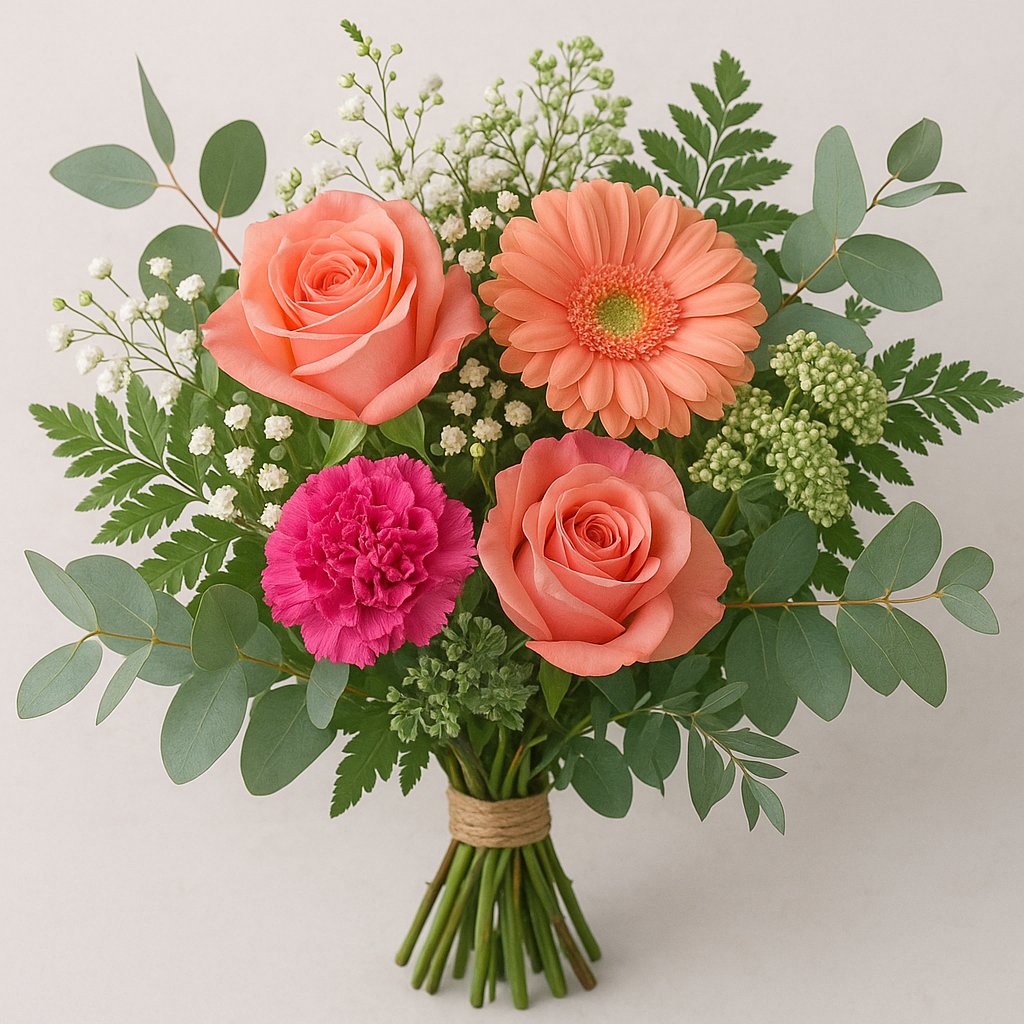
- A mix of roles – focal flowers, fillers, airy accents, and foliage for complete bouquets
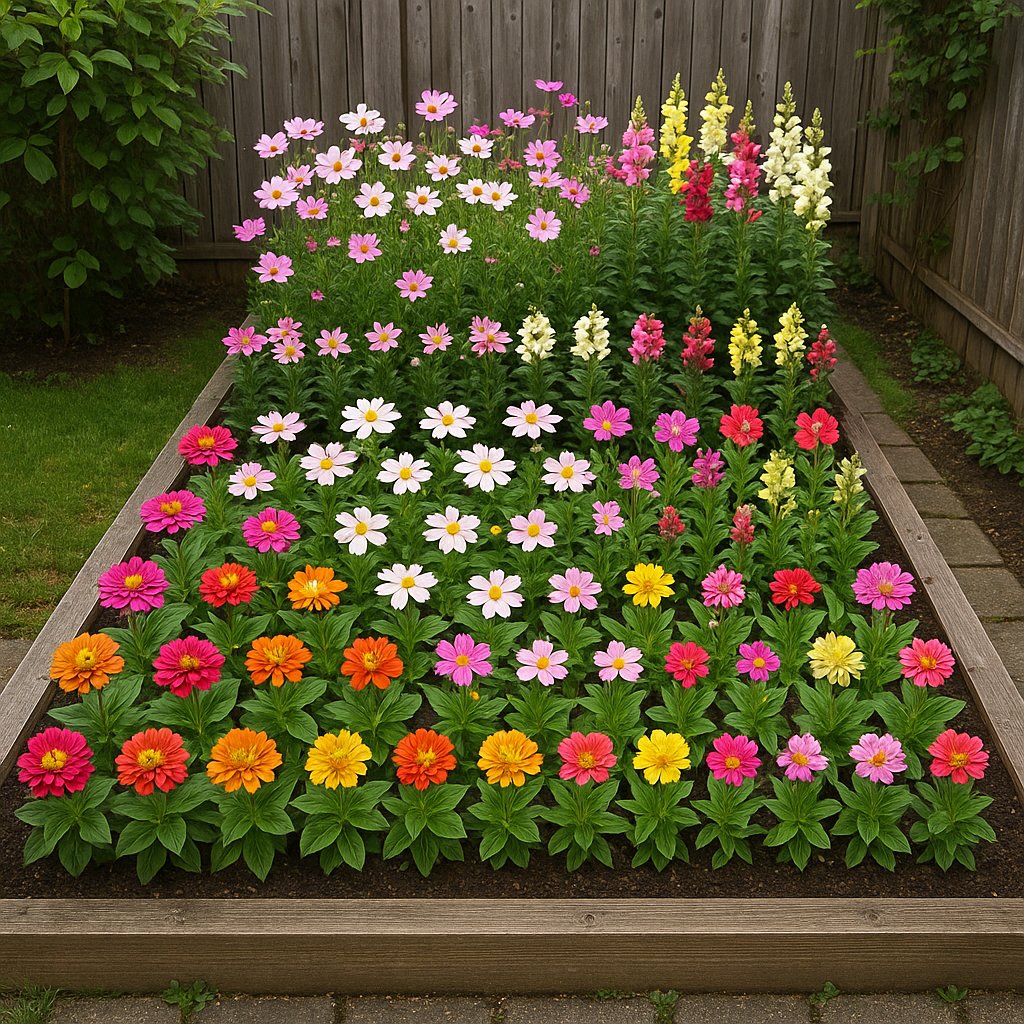
Think of your cutting garden less like a display and more like a productive patch – rows work better than clusters, and beauty in the bed is secondary to beauty on the table.
Choosing the right spot (it’s simpler than you think)
Most popular cut flowers need one thing above all else: sunlight. Look for a spot that gets at least 6 to 8 hours of direct sun daily. South-facing areas tend to work well across most of the continental U.S.
Beyond sunlight, consider these factors:
- Wind exposure. Tall stems like delphiniums and snapdragons can snap in gusty spots. A fence, hedge, or building on the windward side helps.
- Water access. You’ll be watering regularly through summer. Being close to a hose bib saves time and frustration.
- Drainage. Standing water after rain is a red flag. Most cut flowers hate soggy roots. Raised beds solve drainage problems quickly.
- Proximity to your house. This one gets overlooked. If your cutting garden is a 5-minute walk away, you’re less likely to harvest at the ideal time – early morning – and less likely to notice pest problems early.
How much space do you actually need?
Here’s a number that surprises people: a plot as small as 4 feet by 8 feet – 32 square feet – can produce enough flowers for a fresh bouquet every single week from June through September. If you have more room, a 4-by-16-foot bed gives you the space to stagger plantings and grow a wider variety. But start small. You can always expand next year.
Soil preparation – the step that pays for itself all season
I’ve watched people spend $80 on specialty seeds and then plant them in compacted clay without amending it. That’s like buying premium fuel and pouring it into an engine with no oil. Soil is everything.
Here’s a straightforward approach that works in most backyard situations:
- Test your soil pH. Most cut flowers thrive between 6.0 and 7.0. Your local cooperative extension office (every state has one) can test your soil for a few dollars. It’s worth it.
- Add organic matter. Work 2 to 3 inches of well-aged compost into the top 8 to 10 inches of soil. This improves drainage in clay, water retention in sand, and fertility across the board.
- Use a balanced granular fertilizer. A 10-10-10 or similar all-purpose blend mixed in at planting time provides a solid nutritional base. Side-dress with compost or a diluted liquid fertilizer every 3 to 4 weeks during peak growing season.
One often-missed detail: avoid over-fertilizing with nitrogen-heavy products. Too much nitrogen produces lush foliage but fewer blooms – exactly the opposite of what you want.
What to plant: a practical selection strategy
Most competitor guides recommend annuals for beginners, and I agree – but I think the why matters more than the recommendation itself. Annuals complete their entire life cycle in one season. They bloom faster, produce more prolifically, and many of them actually increase flower production when you cut from them. They’re also inexpensive to grow from seed, so failures don’t hurt your wallet.
The backbone: reliable annuals for first-year growers
- Zinnias – the single most productive cut flower you can grow. The “Benary’s Giant” and “Queen Lime” series produce dinner-plate-sized blooms on 30-inch stems. Direct sow after your last frost date.
- Cosmos – airy, elegant, and virtually impossible to kill. Great for filler and volume in arrangements.
- Sunflowers – choose branching varieties like “ProCut” series for multiple stems per plant rather than one giant single head.
- Snapdragons – a cool-season star. Start seeds indoors 8 to 10 weeks before last frost. They bloom early, take light frosts, and add vertical structure to bouquets.
- Celosia – heat-loving and drought-tolerant. Varieties like “Chief Mix” produce stunning plume-shaped flowers that last over a week in water.
Don’t forget the supporting cast
A bouquet of all focal flowers can look flat. You need variety in form and texture. This is a gap I notice in many beginner guides – they list pretty flowers but skip the elements that make arrangements look professional.
- Fillers: Ammi majus (Bishop’s flower), feverfew, statice
- Textural accents: Amaranthus (love-lies-bleeding), ornamental grasses, nigella seed pods
- Greenery: Eucalyptus (in warmer zones), basil (yes, regular basil), dusty miller, bells of Ireland
A good rule of thumb: for every three focal flower varieties, plant at least two filler or accent varieties.
Seeds vs. transplants – and when to start each
Some flowers do best when sown directly into the garden. Others need a head start indoors. Here’s a quick breakdown:
Direct sow outdoors after last frost: zinnias, cosmos, sunflowers, marigolds, celosia. These resent root disturbance and germinate quickly in warm soil.
Start indoors 6 to 10 weeks before last frost: snapdragons, stock, lisianthus, dahlias (from seed), strawflowers. These need more time to reach blooming size.
Plant as bulbs or tubers: dahlias, ranunculus, anemones. Dahlias go in after your last frost; ranunculus and anemones typically get pre-sprouted and planted earlier, depending on your zone.
One technique that makes a massive difference: succession planting. Instead of sowing all your zinnia seeds at once, plant a batch every two to three weeks from late spring through early summer. This staggers bloom times so you aren’t drowning in flowers for two weeks and then have nothing for the rest of August.
Maintenance that actually matters: pinching, staking, and deadheading
Three tasks will dramatically increase your harvest. None of them take much time, but all of them are easy to skip – and skipping them is the most common mistake I see beginners make.
Pinching
When plants like zinnias, cosmos, snapdragons, and dahlias are about 10 to 12 inches tall, cut the main stem back to just above a set of leaves. This feels counterintuitive – you’re cutting off perfectly healthy growth. But pinching forces the plant to branch out, producing multiple flowering stems instead of just one. The result? Three to four times more blooms per plant.
Staking and support
Tall stems loaded with flowers will topple, especially after rain. The easiest support method for a backyard garden is the “corral” approach: pound four stakes at the corners of your bed and run horizontal netting (like Hortonova or even simple garden twine) at 12-inch intervals as plants grow. The stems grow up through the grid and stay upright naturally.
Deadheading
If you miss cutting a flower and it goes to seed, the plant thinks its job is done and slows down production. Remove spent blooms regularly to keep the plant focused on producing new flowers. This is especially critical with zinnias, sweet peas, and cosmos.
Harvesting and conditioning – where most vase life is won or lost
You can grow the most stunning dahlias in your neighborhood, but if you harvest them wrong, they’ll droop within 24 hours. Here’s how to do it right:
- Cut in the early morning or late evening – stems are fully hydrated and ambient temperatures are cool.
- Bring a bucket of cool water to the garden. Plunge stems in immediately after cutting. Don’t let them sit on the grass or a bench while you keep harvesting.
- Cut at the right stage. This varies by flower. Zinnias should be fully open with a firm center (wiggle the stem – if the head wobbles, it’s not ready). Sunflowers are best cut when petals have just started to lift off the face. Snapdragons should have the bottom third of florets open.
- Strip foliage below the waterline. Leaves submerged in vase water decompose rapidly and breed bacteria, which clogs stems and shortens life.
- Let stems rest in cool water for at least 2 hours in a dark, cool spot before arranging. Professionals call this “conditioning,” and it can add 3 to 5 days to vase life.
A tablespoon of bleach per gallon of vase water keeps bacteria in check – it’s more effective than most commercial flower food packets, and you already have it in your laundry room.
Extending the season: blooms from spring through hard frost
One area most guides skip entirely is how to stretch your cutting season beyond the typical July-through-September window. With a little planning, you can have homegrown bouquets for five or even six months.
- Early spring (March–May): Plant cool-season crops like sweet peas, stock, ranunculus, and Iceland poppies. In Zones 7 and above, these can go in during fall for spring bloom.
- Summer peak (June–August): Zinnias, dahlias, sunflowers, lisianthus, and celosia carry the bulk of the season.
- Late season (September–October): Dahlias peak in fall. Strawflowers and statice keep going until hard frost. Ornamental grasses and seed heads add texture even as annuals fade.
Succession planting, mentioned earlier, is your single most powerful tool here. Combined with a mix of cool-season and warm-season varieties, it turns your small patch into a near-continuous production system.
Your backyard bouquets start with a single weekend
Growing cut flowers is one of those rare gardening pursuits where the learning curve is gentle and the rewards come fast. You don’t need perfection – you need to get seeds in the ground and stay consistent with a few key practices like pinching, watering, and harvesting at the right time.
Start with three or four easy annuals this season. Pay attention to what thrives in your specific conditions. Keep notes – even rough ones – about what bloomed when and how long it lasted in a vase. That firsthand knowledge, accumulated over just one or two seasons, will be more valuable than any guide. And the jar of zinnias on your kitchen table? That’ll be the part that makes it all worthwhile.
Why some flowers close their petals at night (nyctinasty)
Walk past your garden tulips at 9 PM and they look like a completely different plant than they did at noon. Petals pulled tight, colors muted, the whole bloom folded in on itself like a closed umbrella. By morning, everything opens again as if nothing happened. If you’ve ever caught this in action, you’ve witnessed nyctinasty – one of the most quietly fascinating behaviors in the plant world.
But here’s what stuck with me: this isn’t random. It’s not wilting, it’s not dying, and it’s not a sign that something is wrong. It’s a deliberate, rhythmic movement that certain species have been performing for millions of years. And the reasons behind it are more nuanced – and more debated – than most articles let on.
What exactly happens inside a closing flower?
The word “nyctinasty” comes from the Greek nyx (night) and nastos (pressed close). But the name only tells you when it happens, not how. The mechanics are genuinely elegant.
At the base of each petal – and in leaf-closing species, at the base of the leaf stalk – there’s a swollen region of cells called the pulvinus. Think of it as a biological hinge. When darkness falls, potassium and chloride ions shuttle out of cells on one side of the pulvinus. Water follows those ions through osmosis, and those cells lose turgor pressure. The cells on the opposite side stay plump. That differential pressure literally bends the petal inward.
Come morning, the process reverses. Light triggers ion channels to open, water floods back in, and the petals unfurl.
What makes this especially interesting is that it’s not purely a response to light. Research going back to the 18th century – the French astronomer Jean-Jacques d’Ortous de Mairan noticed it in 1729 with mimosa plants – has shown that these movements persist even in continuous darkness. The plant has an internal circadian clock. Light is the primary signal that synchronizes the rhythm, but the oscillation itself is endogenous. Remove the light cue entirely, and the opening-closing cycle continues for several days before gradually drifting out of sync.

The “why” is more complicated than you’d think
Most sources settle on one or two explanations for why flowers evolved this behavior. The real picture involves several overlapping hypotheses, and honestly, botanists still argue about which ones carry the most weight.
Pollen protection
This is the leading hypothesis. Pollen grains are vulnerable to moisture – dew, rain, and the general humidity spike that often comes after sunset. Wet pollen doesn’t transfer effectively to pollinators. By closing up, the flower shields its reproductive material through the dampest hours. A 2019 study on Crocus published in the Annals of Botany found that flowers prevented from closing had significantly lower pollen viability after a single dewy night compared to control plants that closed normally.
Thermal regulation
Closed petals create a microenvironment that can be measurably warmer than the surrounding air. For species that bloom in early spring – crocuses, tulips, certain Adonis species – this matters. The developing ovules and stamens are kept a few critical degrees above ambient temperature. Some researchers have measured a 3–5°F difference inside a closed tulip versus the outside air on a cold April night.
Pollinator economics
Here’s an angle that doesn’t get enough attention. If a flower stays open at night but its pollinators are diurnal (active during the day), then those open petals are essentially an unattended buffet for nocturnal visitors – beetles, moths, or other insects that feed on pollen and nectar without efficiently pollinating the flower. Closing eliminates the freeloaders. It’s a way of making sure the flower’s resources only go to the insects most likely to carry pollen to another bloom of the same species.
Predation and herbivory
Petals and reproductive structures are nutritious. Some researchers suggest that closing reduces the visual and olfactory signal that attracts nocturnal herbivores. A tightly closed bud is harder for a beetle to chew into than a wide-open flower. This hypothesis is harder to test directly, but it aligns with what we see in species growing in habitats with heavy insect herbivory.
Not all petal movement is nyctinasty
This is a point that gets muddled frequently. Several related phenomena look similar to the casual observer but involve different mechanisms:
- Photonasty – movement triggered directly by light intensity changes, without an underlying circadian component. The flower simply responds to brightness. If you put a photonastic flower in constant light, it stays open. A nyctinastic flower in constant light will still attempt to close on schedule.
- Thermonasty – movement driven by temperature. Tulips are partly thermonastic: warm your tulip with a heat lamp at night, and it’ll open. But research shows a circadian component layered on top of the temperature response, making tulips a hybrid case.
- Seismonasty – movement triggered by touch or vibration, like the famous sensitive plant (Mimosa pudica). Totally different trigger, though the pulvinus mechanism is similar.
The distinctions matter because they affect how your plants behave in different environments. If you grow tulips indoors under constant artificial light and steady temperature, don’t be surprised if their opening-closing rhythm becomes irregular or disappears. They need the daily swing of light and temperature to keep the clock calibrated.

Seven common nyctinastic species you can observe in your own yard
You don’t need a botanical garden for this. Many popular garden plants across USDA zones 4–9 exhibit noticeable petal movement:
- Tulips (Tulipa spp.) – One of the most dramatic closers. The response is partly temperature-driven, so you can even watch it happen in real time by bringing a cut tulip from a cool porch into a warm room.
- California poppies (Eschscholzia californica) – Close tightly on cloudy days too, not just at night. A true light-responsive closer.
- Purple shamrock (Oxalis triangularis) – Both the leaves and flowers fold. The leaf movement is especially fun to watch – they droop like little sleeping umbrellas.
- Crocus (Crocus spp.) – Spring crocuses snap shut remarkably fast as shadows lengthen.
- Morning glory (Ipomoea purpurea) – Opens at dawn, spent by afternoon. Not exactly classic nighttime closing, but a clear example of light-synchronized petal behavior.
- Gazania (Gazania rigens) – Stays stubbornly shut on overcast days, which frustrates some gardeners but makes perfect evolutionary sense.
- Moss rose (Portulaca grandiflora) – Full sun only. These petals won’t budge without direct light.
What Darwin got right – and what we’re still figuring out
Charles Darwin devoted an entire book to plant movement – The Power of Movement in Plants (1880), co-authored with his son Francis. He meticulously documented the sleep movements of dozens of species and concluded that the behavior must offer some protective advantage, likely against cold. He was on the right track, but he didn’t have access to the molecular tools we have now.
Today, researchers have identified specific clock genes – like LHY and TOC1 – that regulate circadian rhythms in plants. They’ve traced the signaling pathway from photoreceptors (phytochromes and cryptochromes that sense red and blue light) down to the ion channels in the pulvinus. But significant gaps remain. We still don’t fully understand why closely related species in the same genus sometimes differ – one closes at night, the other doesn’t. And the ecological cost-benefit math is hard to pin down precisely: how much energy does the movement itself consume, and does the protection gained always outweigh that cost?
A 2021 paper in New Phytologist proposed that nyctinasty may also play a role in water conservation – closed petals reduce transpiration from the petal surface during the hours when photosynthesis isn’t happening anyway. It’s a compelling idea, especially for species in arid habitats, though more field data is needed. Ongoing work as of 2025 and into 2026 continues to refine these models, with several research groups using thermal imaging and real-time ion-flux sensors to quantify the energetic costs and benefits of petal closure under field conditions.
A simple experiment you can try this weekend
If you want to see circadian plant movement with your own eyes – and prove it’s not just a light reaction – try this with a potted Oxalis or a cut tulip:
- Place the plant in a room with a regular light-dark cycle for two days so it synchronizes.
- On the third evening, move it into a dark closet and leave it there.
- Check every few hours. You’ll notice it still opens roughly on schedule the next “morning,” even in total darkness.
- By the second or third day in constant darkness, the rhythm starts to drift – the “waking” time shifts later each cycle, usually by 30–90 minutes per day.
This tells you something profound: the plant isn’t just passively reacting to its environment. It’s keeping time internally, anticipating dawn before it arrives.
What this means for the way we think about plants
Nyctinasty challenges the default assumption that plants are static, passive organisms. They’re not. They track time, anticipate environmental changes, and execute coordinated mechanical responses. The more you observe these rhythms – really watch them – the more you start to appreciate that a garden is full of quiet, slow-motion activity that most of us walk right past.
If this topic has piqued your curiosity about the hidden lives of flowers, the team at Orlaya Flora shares a wealth of insights into plant behavior, seasonal bloom patterns, and species-specific growing guidance that goes well beyond the basics. It’s a good next stop for anyone who wants to dig deeper into what their flowers are actually doing when we’re not watching.
Flowers in space: experiments with plant growth on the International Space Station
In January 2016, astronaut Scott Kelly posted a photo on social media that stopped people mid-scroll. It was an orange zinnia – bright, delicate, unmistakably alive – blooming aboard the International Space Station. The image felt almost surreal: a flower, something we associate with backyards and window boxes, floating 250 miles above Earth in a place where nothing is supposed to grow without a fight.
That zinnia wasn’t just pretty. It represented decades of painstaking research, failed attempts, mold outbreaks, and creative problem-solving. And it marked a turning point in how we think about growing plants beyond our planet – not just for food, but for the psychological well-being of humans who may one day spend years traveling to Mars.
Here’s a closer look at how flowers and plants have become a serious area of scientific inquiry aboard the ISS, what we’ve learned so far, and why it matters for life both in orbit and back on the ground.

Why bother growing flowers in orbit?
It’s a fair question. When you’re spending roughly $20,000 per pound to ship cargo to the ISS, why dedicate precious space and crew time to flowers? The answer is twofold – and neither part is trivial.
The science case
Flowering represents a complex stage in a plant’s life cycle. If researchers can get a plant to flower and produce seeds in microgravity, it means they can potentially close the loop on space agriculture – growing multiple generations of crops without needing to send new seeds from Earth. That’s essential for any long-duration mission to Mars or beyond, where resupply simply isn’t an option.
Flowers also serve as biological indicators. The way a plant develops buds, opens petals, and responds to light in zero-g tells scientists a great deal about how fundamental biological processes – hormone signaling, gravitropism, water transport – work when you remove gravity from the equation. Some of these insights have implications for agriculture back on Earth, particularly in understanding how plants respond to environmental stress.
The human case
Astronauts consistently report that tending plants is one of the most calming, grounding activities they can do in space. Don Pettit, who unofficially grew zucchini and sunflowers during Expedition 31 in 2012, kept a blog written from the plants’ perspective. It became a quiet internet sensation. The psychological value of watching something green and alive grow in an otherwise sterile, mechanical environment is hard to overstate.
NASA behavioral scientists have noted that as missions get longer – the current record for an American astronaut is 371 consecutive days – the need for what they call “Earth analogs” becomes more urgent. A small garden, even one that fits inside a container the size of a carry-on suitcase, can help combat the isolation and sensory monotony of spaceflight.
The hardware: Veggie, APH, and the gardens that made it possible
Growing anything in space requires solving problems that simply don’t exist in a terrestrial garden. Water doesn’t drain. It forms floating blobs. Roots can’t “feel” which way is down. Air doesn’t circulate naturally. Every one of these challenges required purpose-built hardware.
Veggie – the workhorse
The Vegetable Production System, nicknamed Veggie, arrived on the ISS in 2014. It’s deceptively simple: a flat panel of red, blue, and green LEDs mounted above a set of plant “pillows” – small bags filled with a clay-based growth medium and controlled-release fertilizer. Seeds are pre-planted in these pillows on the ground, and astronauts just add water and light once they’re in orbit.
Veggie’s footprint is about the size of a small microwave oven. It doesn’t have much environmental control – no humidity regulation, no closed-loop CO₂ management. That simplicity is actually the point. NASA wanted to learn whether plants could handle the ambient conditions of the station, which typically sits around 40–60% humidity with CO₂ levels significantly higher than Earth’s atmosphere (often 2,000–5,000 ppm, compared to roughly 420 ppm on Earth).
The first lettuce crop from Veggie (the VEG-01 experiment) was harvested in 2014 but wasn’t eaten until 2015, after ground teams confirmed it was safe. Since then, crews have grown red romaine lettuce, Tokyo bekana cabbage, mizuna mustard, kale, and – most famously – zinnias.
Advanced Plant Habitat – the precision lab
Where Veggie is a stripped-down garden box, the Advanced Plant Habitat (APH) is a fully enclosed, automated growth chamber. Installed in 2017, it controls temperature, humidity, oxygen, and CO₂ levels independently. It has over 180 sensors and a water recovery system. Its LED array can be programmed to simulate different day lengths and light spectra.
APH was designed for experiments where precise conditions matter – genetic studies, for instance, or investigations into how specific environmental variables affect flowering. The PH-02 experiment used APH to grow radishes, allowing scientists to compare their genetic expression in microgravity to identical plants grown in identical chambers at Kennedy Space Center. The results showed measurable differences in gene activity related to stress responses and nutrient uptake.

XROOTS – ditching the soil entirely
One of the more recent innovations, the eXposed Root On-Orbit Test System (XROOTS), tested hydroponic and aeroponic techniques on the station. The idea was to figure out whether soilless growing methods – which are already common in commercial agriculture on Earth – could scale up for space. Early results were promising, with plants developing healthy root systems without any traditional growth medium.
The zinnia story: when things go wrong (and right)
The VEG-01D zinnia experiment in late 2015 is one of the most instructive episodes in space botany – not because everything went smoothly, but precisely because it didn’t.
Zinnias were chosen because they’re more challenging than lettuce. They need 60 to 80 days to flower (compared to about 28 for lettuce), and they’re sensitive to light, water, and air circulation. NASA wanted to test whether a long-growth-cycle flowering plant could survive the ISS environment.
About two weeks in, things started going sideways. The leaves began curling and showing signs of overwatering. Then mold appeared – Fusarium, a common fungal pathogen. The crew was following a watering protocol designed by ground teams, but the on-orbit conditions were different enough that the schedule didn’t work. Water wasn’t evaporating or draining the way models predicted.
Scott Kelly, drawing on what he described as his own gardening intuition, asked Mission Control for permission to deviate from the set protocol. He got it. He began watering the plants based on his own assessment of soil moisture and leaf condition rather than a fixed schedule. Some plants died. But others recovered. And on January 12, 2016, the first zinnia bloomed in space.
That episode changed how NASA thought about crew autonomy in plant care. The agency realized that for future long-duration missions, astronauts would need to act more like farmers than lab technicians – making judgment calls based on what they see, not just what a protocol says.
What space botany teaches us about plants on Earth
The research has value that extends well beyond spaceflight planning. Here are three areas where ISS plant experiments have contributed to terrestrial science:
- Stress genetics: Plants in microgravity activate stress-response genes that are also triggered by drought, salinity, and extreme temperatures on Earth. Studying these pathways in the “clean” environment of space – where gravity is removed as a variable – helps geneticists isolate which genes do what.
- LED optimization: The LED research done for Veggie and APH has directly informed the rapidly growing indoor farming industry. The specific red-blue light ratios tested on the ISS are now used in commercial vertical farms across the United States.
- Water delivery systems: The capillary-based watering methods developed for microgravity have inspired more efficient irrigation designs for arid-climate agriculture, where every drop counts.
There’s also a less obvious connection. The work on symbiotic nitrogen fixation – explored through experiments with legumes aboard the station – could eventually influence how we reduce fertilizer dependency in conventional farming. If researchers can understand how plant-microbe partnerships function without gravity, they may unlock more efficient ways to harness those partnerships on the ground.
What comes next: flowers on the Moon and beyond
With NASA’s Artemis program working toward a sustained human presence on the lunar surface, plant growth is already part of the planning. The challenge on the Moon is different from the ISS: there’s about one-sixth Earth’s gravity (not zero), intense radiation, and lunar regolith that’s chemically hostile to most plant roots. Researchers at the University of Florida have already shown that plants can germinate in actual lunar soil brought back by the Apollo missions, though the plants were visibly stressed and grew poorly.
For Mars – with a transit time of roughly seven months each way – the focus shifts to closed-loop food production systems. A crew of four would need thousands of calories daily, and current estimates suggest that growing even 25–30% of their food on board could dramatically reduce launch mass and improve morale. Flowering crops like tomatoes, peppers, and strawberries are on the candidate list because they offer both nutrition and variety.
The beauty of the ISS experiments is that they’re building a knowledge base, one crop cycle at a time. Every zinnia that wilts, every radish that thrives, every legume that forms a nitrogen-fixing nodule in zero-g adds a data point that brings future space gardens closer to reality.

Earth gardens, space thinking
There’s something quietly profound about the connection between space botany and the simple act of growing flowers at home. The same principles that NASA researchers wrestle with – light quality, water management, root health, environmental stress – are exactly what any attentive gardener thinks about, just at a different scale.
If you’re someone who finds this intersection of science and horticulture fascinating, it’s worth exploring how deeper knowledge of plant biology can inform your own growing practices. Resources like Orlaya Flora offer a thoughtful perspective on understanding flowers – their needs, their biology, and the sometimes surprising ways they respond to care.
Whether the garden is in your backyard or orbiting 250 miles overhead, the fundamental relationship remains the same: pay attention to what the plant is telling you, adjust accordingly, and don’t be afraid to deviate from the script. Scott Kelly would approve.
Why some flowers bloom only at night
Picture this: it’s a warm July evening in your backyard. The sun has just dipped below the horizon, the crickets are warming up, and suddenly – a flash of white catches your eye. A tightly wound bud you’ve been watching for days is finally unfurling, petal by petal, releasing a scent so sweet it stops you mid-step. By morning, the flower will be gone.
I’ve watched this happen with a night-blooming cereus on my patio, and honestly, it felt like witnessing something that wasn’t meant to be seen. But here’s the thing – it absolutely was. Just not by me. That flower was performing for an entirely different audience, and every detail of its design – the color, the timing, the fragrance – was calibrated for creatures that come alive after dark.
So why do some plants skip the sunlit hours entirely? The answer is more layered than most articles will tell you. It’s not just about pollinators. It’s about survival strategy, water economics, evolutionary gambles, and a biological clock ticking inside every cell.
The pollinator argument – and why it’s only half the story
Most explanations start and stop here: nocturnal flowers bloom at night to attract nocturnal pollinators. Moths, bats, certain beetles. That’s true, but it undersells what’s actually happening.
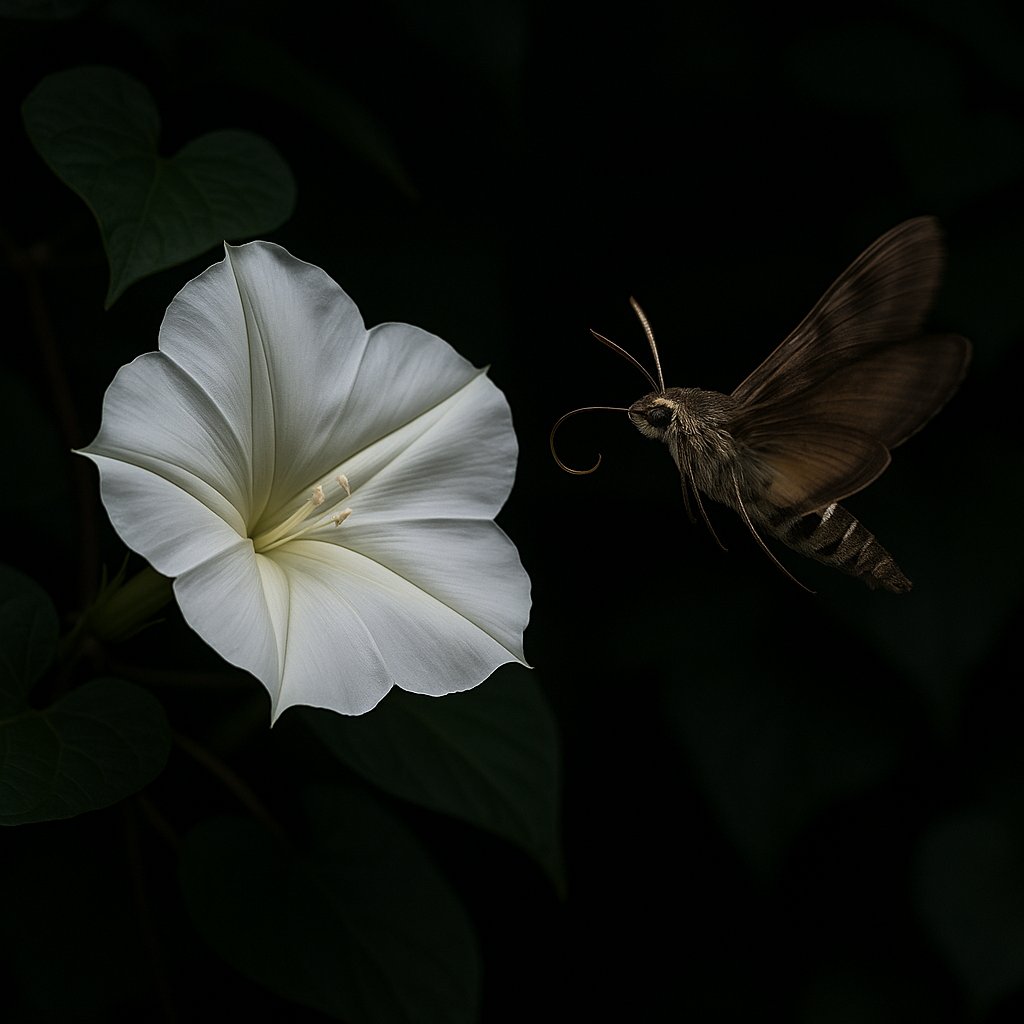
Think about the daytime pollination market. It’s crowded. Bees, butterflies, hummingbirds, flies – they’re all competing for the same flowers, and those flowers are competing for the same pollinators. Now imagine a plant that sidesteps this entire frenzy by opening shop when the competition is asleep. Fewer pollinators are available at night, sure, but the ones that do show up – hawk moths, sphinx moths, nectar-feeding bats – have far fewer options. The relationship becomes almost exclusive.
This is what biologists call temporal niche partitioning. Instead of competing in a saturated daytime marketplace, night-blooming plants carved out their own shift. And they adapted every aspect of their biology to dominate it.
How nocturnal flowers “speak” to their pollinators
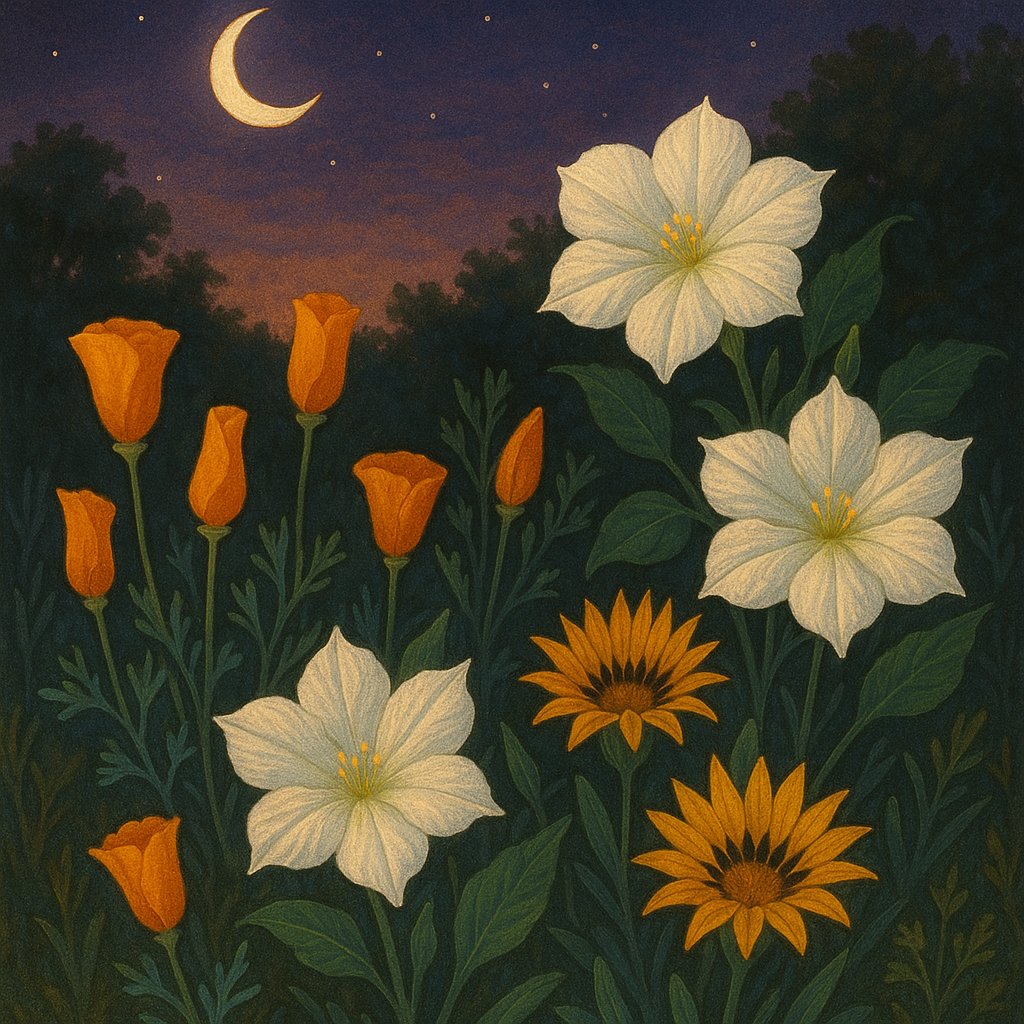
Color is the first giveaway. Notice how night-blooming flowers tend to be white, pale yellow, or cream? In low light, these colors reflect even faint moonlight, making the blooms visible to moths navigating by sight. Dark reds and blues – so attractive to daytime bees – would simply vanish in the darkness.
Then there’s fragrance. Nocturnal flowers don’t just smell nice – they are scent powerhouses. Evening primrose, tuberose, night-blooming jasmine – these plants pump out volatile organic compounds at concentrations that would be overkill during the day. Hawk moths can detect certain floral scents from over a quarter mile away. The flower doesn’t need to be seen first. It needs to be smelled first.
And the shapes tell a story too. Long, tubular corollas are common among night bloomers because they match the long proboscis of sphinx moths. The flower and the pollinator evolved together, each shaping the other over millions of years.
The clock inside the petals
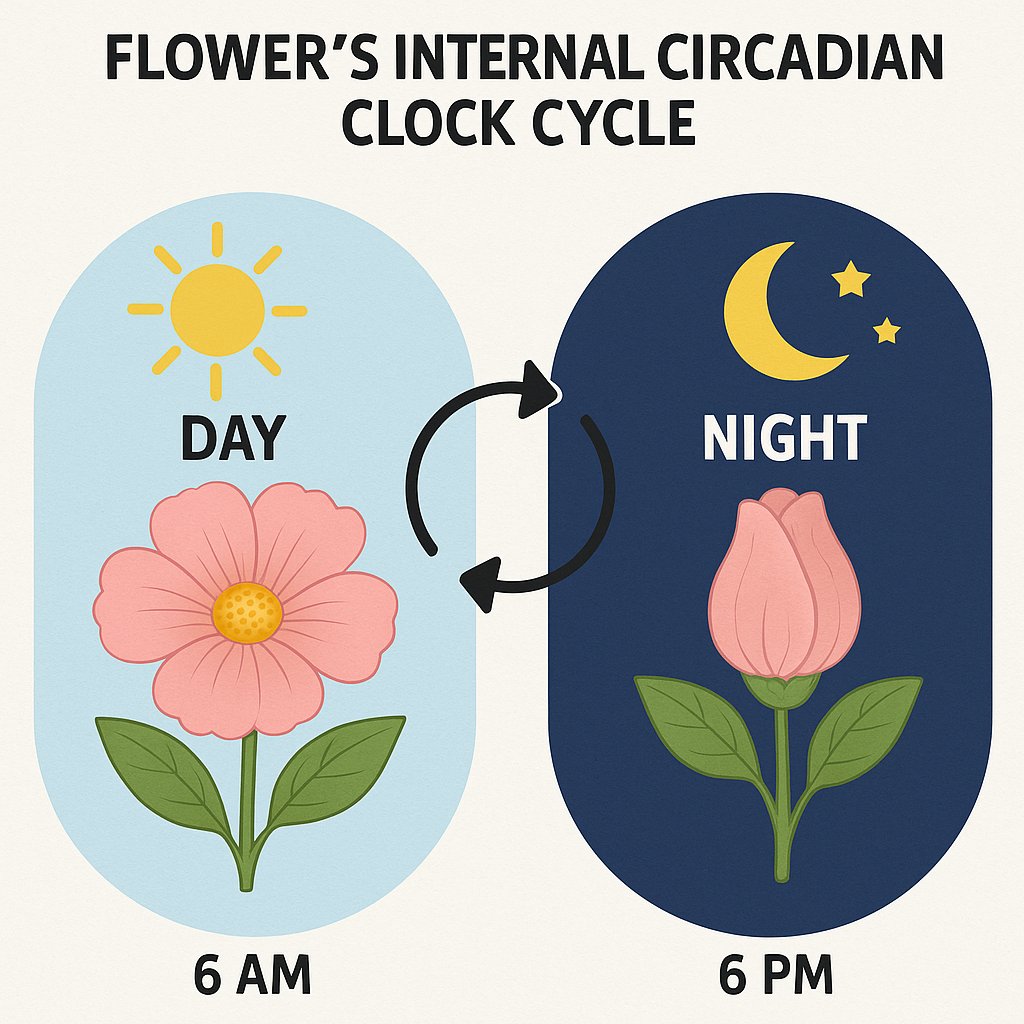
Here’s something rarely explained in depth: flowers don’t simply “react” to darkness. They anticipate it. The mechanism is governed by circadian rhythms – internal biological clocks that cycle roughly every 24 hours, just like in humans.
In plants, these clocks are driven by a set of proteins that rise and fall in concentration throughout the day. Key among them are components of what scientists call the TOC1-CCA1 feedback loop (named after the genes involved in Arabidopsis research but present in various forms across flowering plants). Light resets this clock each morning, but the clock itself keeps running even in constant darkness – proving it’s truly internal, not just a reaction to external light.
What this means practically: a night-blooming cereus “knows” when evening is approaching hours before the sun sets. The biochemical cascade that softens cell walls in the petals, inflates them with water, and triggers scent production begins well in advance. By the time twilight arrives, the flower is ready.
Temperature and humidity play supporting roles
There’s a less-discussed but critical factor: water conservation. Many nocturnal bloomers evolved in arid or semi-arid environments – deserts, dry tropical forests, Mediterranean climates. Opening a flower is an act of water loss. Petals are essentially exposed moist tissue, and during hot, dry daytime hours, evaporation is ruthless.
By blooming at night – when temperatures drop, humidity rises, and evapotranspiration slows – these plants conserve precious moisture. The queen of the night cactus (Epiphyllum oxypetalum) is a perfect example. Native to Central American forests and adapted to dry conditions, it blooms for a single night, closes by dawn, and avoids the punishing midday heat entirely.
This isn’t just about the flower itself. Pollen viability also suffers in extreme heat. Some studies suggest that pollen grains from night-blooming species remain fertile longer because they avoid UV radiation and thermal stress. The plant isn’t just protecting petals – it’s protecting its reproductive future.
Night bloomers you might already have in your garden
Let’s move from theory to the plants themselves. Here are a few worth knowing – some common, some you might not have heard of:
- Moonflower (Ipomoea alba) – A vigorous vine across USDA zones 10–12 (annual elsewhere). Its 6-inch white trumpets open at dusk and close by mid-morning. Easy to grow from seed after nicking the hard coat.
- Evening primrose (Oenothera biennis) – Native to North America and often considered a weed, which is a shame. Its yellow flowers pop open in seconds at twilight – fast enough to actually watch in real time.
- Night-blooming jasmine (Cestrum nocturnum) – The fragrance on this one is almost too much. One bush can perfume an entire yard. Popular in the South but tender below zone 9.
- Four o’clocks (Mirabilis jalapa) – Not strictly nocturnal but crepuscular – they open in late afternoon and stay open through the night. Multicolored, carefree, and often self-seeding aggressively.
- Night-blooming cereus (multiple genera) – The dramatic one. Blooms once a year, for one night. Communities in the Southwest throw “cereus watching parties” to catch the event.
- Dragon fruit cactus (Hylocereus undatus) – Yes, the fruit you buy at the grocery store comes from a night-blooming cactus. The flowers are enormous, fragrant, and last a single night.
One species that deserves more attention is Zaluzianskya capensis, commonly called night phlox or “midnight candy.” Tiny star-shaped blooms, maroon on the back, white on the face, with a scent that genuinely smells like vanilla mixed with honey. It’s underused in American gardens and thrives in containers.
What light pollution is doing to nocturnal blooms
This is the angle almost nobody covers – and it matters.
Research published in Nature in 2017 found that artificial light at night (ALAN) reduced pollinator visits to certain nocturnal flowers by 62%. The light disrupts moth navigation, confuses circadian cues for both plants and insects, and can even suppress scent production in some species. A cabbage thistle study in Switzerland showed that fruit set dropped by 13% under artificial light conditions. Since that initial research, follow-up studies through 2025 have only reinforced the concern, with urban ecologists now listing ALAN as a measurable threat to plant-pollinator networks worldwide.
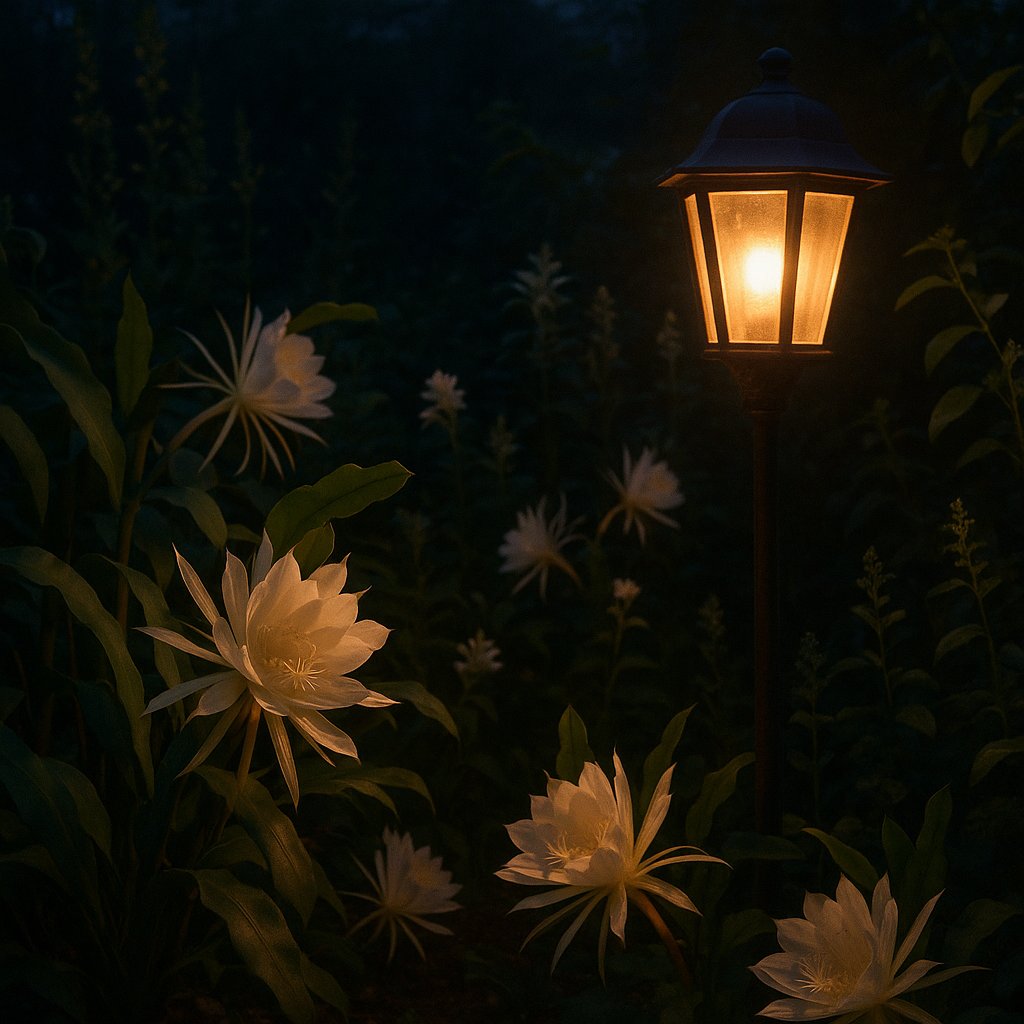
For gardeners growing night-blooming plants, this has practical implications. If your moonflower vine is planted directly under a porch light or near a street lamp, it may receive fewer pollinator visits – and if it’s a species that requires cross-pollination, that means fewer seeds and fruit.
Simple fixes: position night gardens away from strong artificial light, or use warm-toned, low-intensity lighting that’s less disruptive to moths. Red-spectrum lights are generally less attractive to insects than blue-white LEDs.
Bringing the night garden home
If you’re planning a moonlight garden – a space designed to come alive after sunset – think beyond just the flowers. Pair night bloomers with silver-leaved plants like Artemisia or lamb’s ear, which reflect moonlight and create a luminous backdrop. Add a water feature; the sound enhances the sensory experience once you can no longer rely on color.
Placement matters. Position night-blooming species near seating areas, bedroom windows, or paths you walk in the evening. The whole point is to be present when these plants do their work.
For those who want to explore the intersection of botanical knowledge and thoughtful garden design, understanding why a plant blooms when it does isn’t just academic – it changes how you build a garden that truly functions around the clock.
The bigger picture
Night-blooming flowers remind us that the natural world doesn’t operate on our schedule. These plants evolved their rhythms over millions of years, fine-tuning every detail – petal color, scent chemistry, bloom timing, water management – to thrive in a window most of us sleep through.
The next time you step outside after dark, pay attention. That faint sweetness in the air might be a plant that’s been waiting all day for this exact moment – not for you, but for a moth you’ll never see. And there’s something genuinely wonderful about that.