Choosing the best international flower delivery service for your needs
My cousin spent three days trying to get a birthday bouquet to her college roommate studying abroad in Lisbon. She tried a big-name American florist site, watched the price double at checkout with “international handling fees,” then got an email two days later saying the order couldn’t be fulfilled in that postal code. It’s a common story. Sending flowers across borders sounds simple until you actually try it, and that’s when most people discover how fragmented and confusing this industry really is.
Why sending flowers overseas isn’t like ordering a local bouquet
Domestic flower delivery in the US runs on a pretty mature network – wire services, regional growers, same-day courier partnerships. Cross international borders, though, and you’re suddenly dealing with customs regulations, different flower availability by climate and season, currency conversion, and local florists who may not even use the same online booking systems as US-based platforms. A rose that’s in full bloom and cheap in Colombia might be a luxury import in Japan. A florist in rural France might not have a website at all – they rely on regional wholesalers and phone orders.
This is why picking the right service matters so much more than people expect. It’s not just about pretty pictures on a website. It’s about whether the company actually has boots-on-the-ground relationships with florists in the destination country, or whether they’re just relaying your order through three middlemen and hoping for the best.
What actually separates a reliable service from a risky one
Local florist networks versus drop-shipping
Some platforms genuinely partner with independent florists in the destination city – meaning your bouquet is arranged fresh, locally, on the day of delivery. Others act more like brokers, forwarding your order to whichever supplier is cheapest that week, with no direct accountability if something goes wrong. I’ve found that asking a simple question before ordering – “who actually arranges and delivers this?” – tends to reveal a lot. If a company can’t answer clearly, that’s a red flag.
Transparent pricing (and the fees nobody mentions upfront)
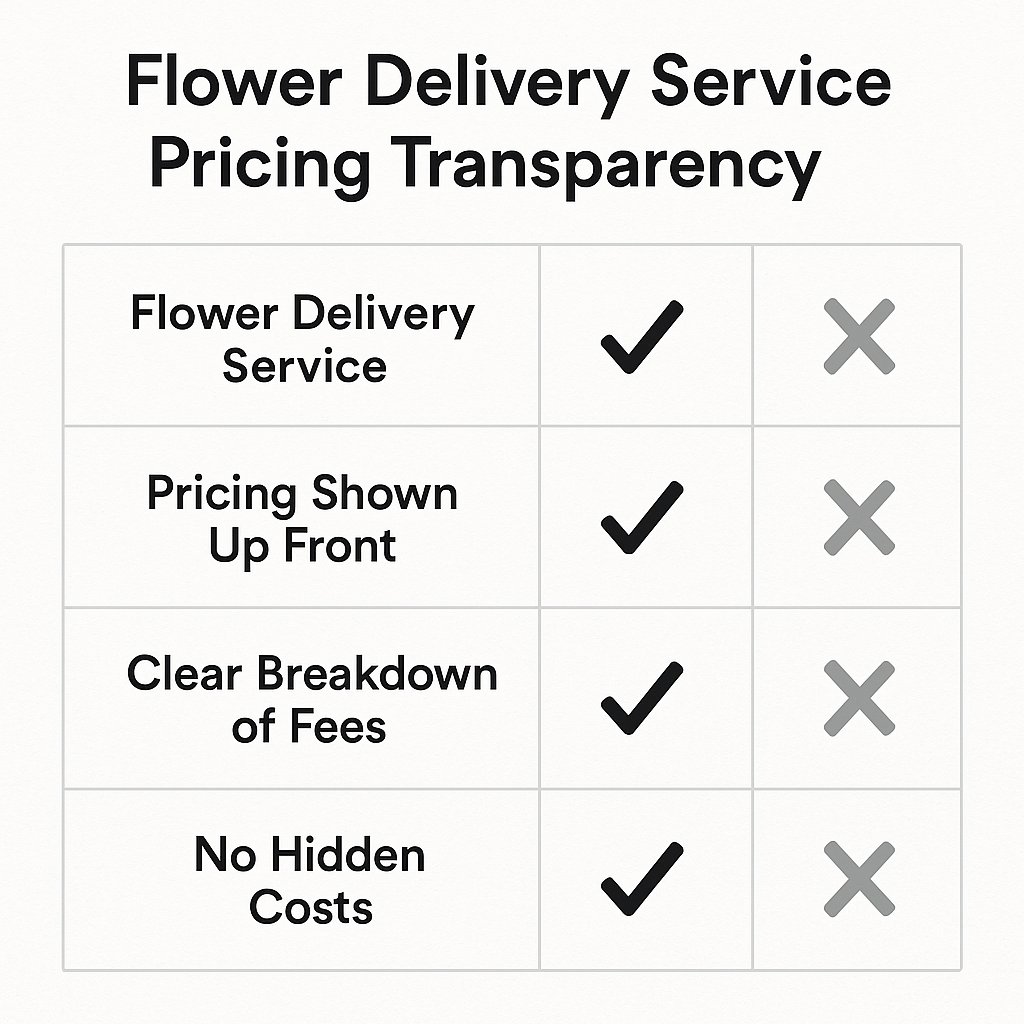
Watch out for services that show one price on the search page and add a “service fee,” “delivery surcharge,” and “currency conversion fee” only at the final checkout screen. This is one of the most common complaints among people who’ve tried ordering internationally. A legitimate operator will show a final, all-in price before you commit, in your home currency, without surprise math at the end.
Delivery guarantees that mean something
“Same-day delivery” claims are easy to make and hard to verify from another continent. Look for services that specify actual delivery windows, offer tracking or confirmation photos, and have a clear refund or redelivery policy if the recipient isn’t home or the flowers arrive damaged. Time zones matter here too – a company promising same-day delivery to Sydney needs to actually understand what “same day” means when it’s already tomorrow there.
| Factor | Reliable service | Risky service |
|---|---|---|
| Florist relationship | Direct partnership, verified locally | Unknown third-party reseller |
| Pricing | All-in price shown upfront | Hidden fees at checkout |
| Delivery proof | Photo confirmation or tracking | No verification offered |
| Customer support | Reachable across time zones | Email-only, slow response |
A few things I’ve learned the hard way
- Always check what flowers are actually in season in the destination country – a “custom” bouquet request for tulips in Manila in August is going to be a problem no matter who you order from.
- Confirm the recipient’s full address format matches local conventions; postal systems abroad don’t always follow the US street-number-then-name pattern, and a florist may not catch the error until delivery day.
- Ask about substitution policies. Nearly every florist reserves the right to swap flowers of similar value if something isn’t available – this isn’t a scam, it’s standard practice, but you should know it’s coming.
Kind of a side note, but worth mentioning: services that specialize specifically in cross-border delivery tend to handle these nuances better than general e-commerce florists that just added an “international” tab to their site. When my sister was researching this after her own delivery mishap, she ended up comparing a handful of dedicated platforms, and it became clear that the ones treating international delivery as their core business – not an afterthought – were far more consistent. That’s really the heart of choosing a best international flower delivery service for your specific situation: match the platform’s actual specialty to what you need, rather than assuming every florist website works the same way everywhere.
Matching the service to the occasion
A sympathy arrangement needing next-day delivery in a small German town has very different requirements than a birthday bouquet for someone in central Tokyo who can receive same-day courier service. For remote or smaller towns, prioritize services with wide local florist networks rather than big-city courier fleets. For major metro areas, same-day guarantees and photo confirmation become realistic expectations you can actually hold the company to.
Where this leaves you
Sending flowers internationally doesn’t have to be a gamble. The key is looking past the homepage photos and checking for real local partnerships, honest pricing, and delivery accountability. Ask questions before you order, not after something goes wrong. If you’re planning a delivery for an upcoming birthday, anniversary, or just because, take twenty minutes to compare a couple of options using the criteria above – it’s a small step that saves a lot of frustration later.