A friend of mine, newly arrived in Abu Dhabi, once sent a huge bouquet of deep red roses to a female Emirati colleague who had just returned from maternity leave. The gesture was kind. The reaction was a polite, slightly puzzled silence. Red roses, a large size, and a male sender added up to a message he never meant to send.
The UAE is warm, hospitable and generous with gifts, but it is also a place where small details carry weight. Nearly 90% of residents are expats, so you’ll often navigate several cultural codes at once. Here is how to give flowers with confidence.
Start with the relationship, not the bouquet
Who you are to the recipient matters more than what is in the vase. A few patterns I’ve noticed over the years:
- Colleagues and business contacts. Keep it modest, elegant and neutral. A mixed arrangement in white, cream or soft pastels works almost anywhere.
- Across genders. Between a man and a woman who aren’t family or close friends, avoid anything that reads as romantic. That means dense red roses, heart-shaped arrangements and oversized displays. If in doubt, address the gift to the whole family or the team.
- Close friends and family. Here you have freedom. Personal taste matters more than protocol.
- Officials and government contacts. Skip anything expensive. Lavish gifts can look like an attempt to influence, and many organisations have strict gift policies. A small, simple arrangement or a card is safer.
Occasions: what works and what to avoid
Emirati social life follows a clear rhythm of celebrations, and flowers fit some of them better than others.
| Occasion | Good choice | Better to avoid |
|---|---|---|
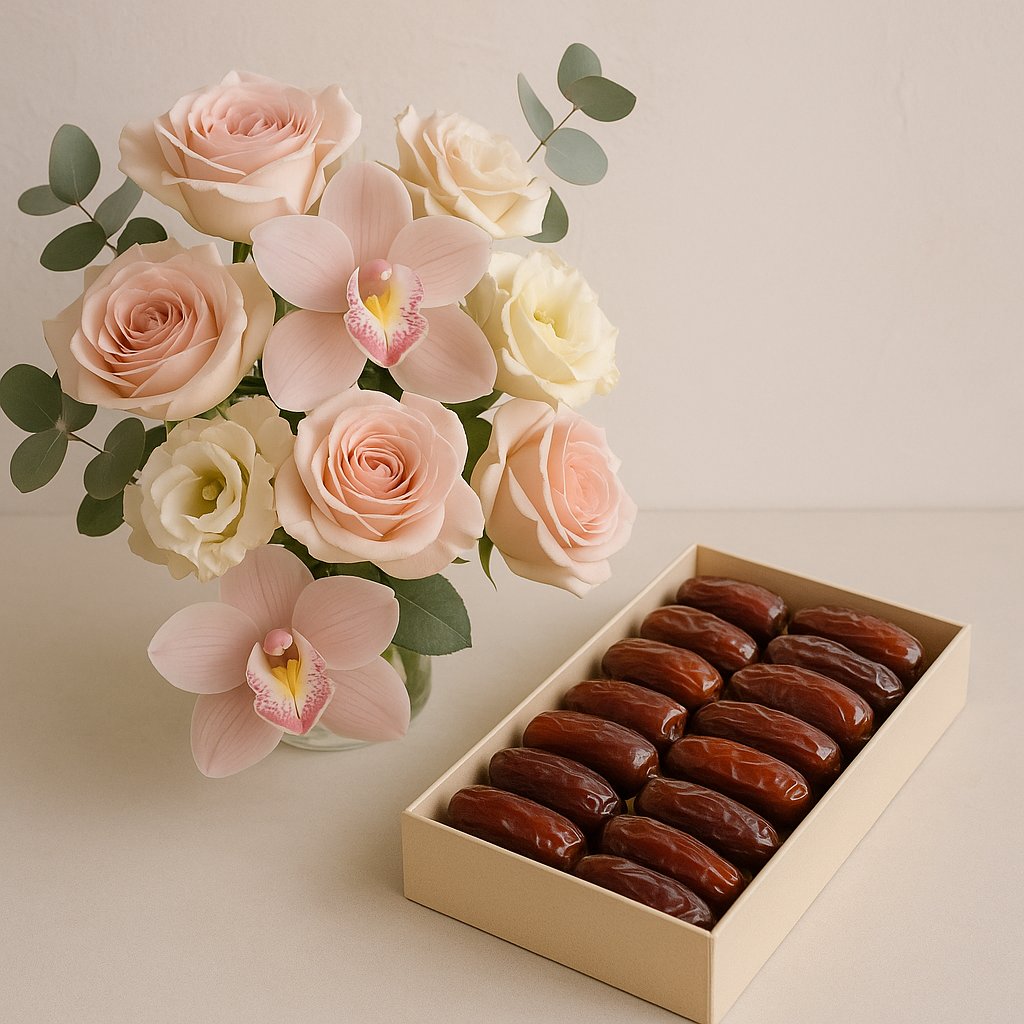
| Eid al-Fitr and Eid al-Adha | Pastel roses, tulips, orchids, often paired with dates or sweets | Dark, heavy palettes; anything with alcohol |
| Ramadan iftar invitation | A small arrangement plus dates or pastries | Arriving with nothing, or with strongly scented flowers that compete with the food |
| Weddings and engagements | White and gold-toned roses, peonies, orchids | Oversized, showy arrangements that upstage the hosts |
| New baby | Soft pink, blue or white, sent to the family | Overpowering lilies near a newborn |
| Hospital visit | Light, low-fragrance stems; check ward rules first | Strong scents, pollen-heavy flowers, anything for ICU |
| Condolences | A note, food for the family, or a donation | Large wreaths for Muslim funerals |
| National Day (2 December) | Red and white blooms with green foliage | Anything that clashes with the national colours in a formal setting |
A word on condolences
This is where I see the most mistakes. Islamic funerals are simple and quick, and floral tributes are not part of the tradition. Families usually appreciate a visit, a heartfelt message, or food sent to the home during the mourning period. If you come from a background where funeral flowers are standard, ask a local colleague before sending anything.
Colour, scent and symbolism across cultures
Because Dubai and Abu Dhabi are so mixed, one bouquet can be read in several ways. White suggests purity and peace for many Arabs, yet it is tied to mourning in parts of South and East Asia. Chrysanthemums are funeral flowers in much of Europe and Asia. Even numbers of stems are a funeral custom for many Russian-speaking residents, who traditionally give odd numbers for celebrations.
My rule of thumb is simple. If you don’t know the recipient’s background, choose mixed arrangements in soft colours, avoid single-colour displays in yellow or deep red, and keep the scent gentle. Orchids, roses, lisianthus and tulips are dependable.
Practical details that people forget
Summer heat changes everything. With outdoor temperatures above 45°C, delicate blooms like hydrangeas and sweet peas wilt quickly, so hardier stems such as orchids, carnations and roses are wiser picks. For gifts you can’t hand over yourself, a reliable flower delivery dubai service can help with timing, but it’s worth checking delivery windows, since a bouquet left in a hot lobby or car won’t arrive looking its best.
A few more points to keep in mind:
- Add a handwritten card. A short, warm message in English or Arabic often matters more than the flowers themselves.
- Skip alcohol pairings. Champagne or wine alongside a bouquet is inappropriate in many settings.
- Consider edible companions. Dates, Arabic sweets or good chocolates are welcome additions, especially during Ramadan and Eid.
- Mind the timing. Avoid delivering during prayer times or late evenings at a private home, and call ahead for workplaces.
- Keep the size proportionate. A huge arrangement can embarrass a recipient in a small office or apartment.
When in doubt, lean toward thoughtfulness
Flower etiquette in the UAE isn’t a rigid rulebook. It’s about showing that you’ve considered the person, the occasion and the setting. Choose soft colours, be careful with romantic signals, treat condolences differently, and pair flowers with something that fits local hospitality, such as dates.
If you want to go deeper, read about Emirati hospitality customs, the traditions around Ramadan and Eid, and the floral habits of the communities you work and live alongside. The more you learn, the easier it becomes to give a gift that feels natural rather than cautious.